Inkolor's First Time on Stage (Montréal JUG)
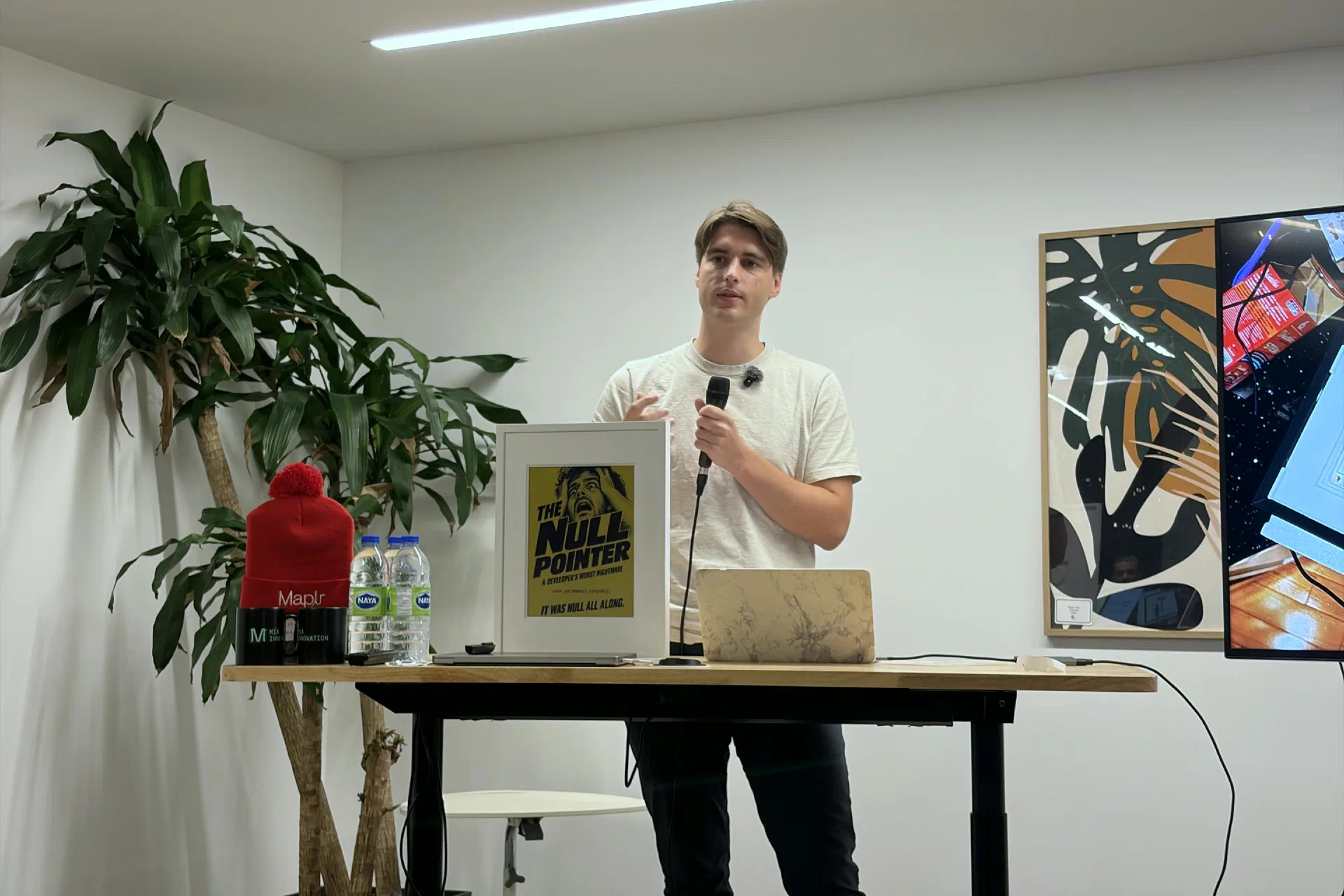
On November 5, I gave a lightning talk at the Montréal Java User Group on how a backend developer ended up building a frame. Then the frame went around the room.

On November 5, the Montréal JUG, the city’s Java User Group, held one of its community lightning talk nights, at Maplr downtown. Six speakers, a few minutes each, and over fifty people in the room. I was the sixth.
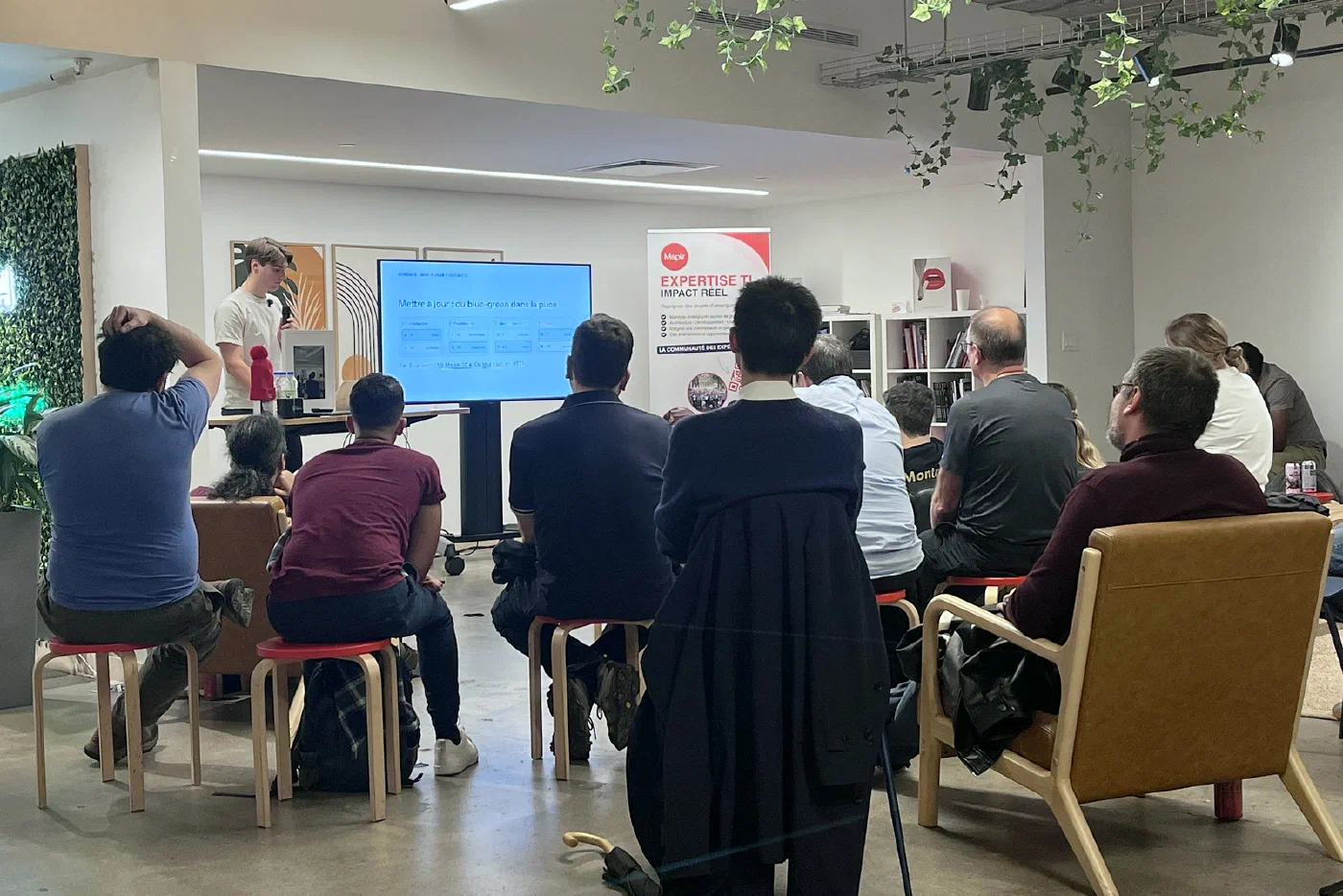
I’ve done these evenings before, always about software: Sablier, my open source project, in 2023, and a contribution to OpenAPI Generator in 2024. This time, as Reeveel’s CTO, I brought something you can hold: Inkolor. And Solal , our CEO, came along.
From backend to hardware
The talk was called “From Backend to Hardware”. For years, I could ship a fix to an online service in seconds. A frame already hanging on someone’s wall is another story. So I walked through our whole journey, from the idea to a product ready for mass production, at a very high level, in five steps.
- The product. A 13.3" colour e-paper screen. Like an e-reader, in colour and much bigger: it reflects light instead of glowing, and a still image uses no power. Bluetooth first: everything works without a network, and Wi-Fi is there if you want it.
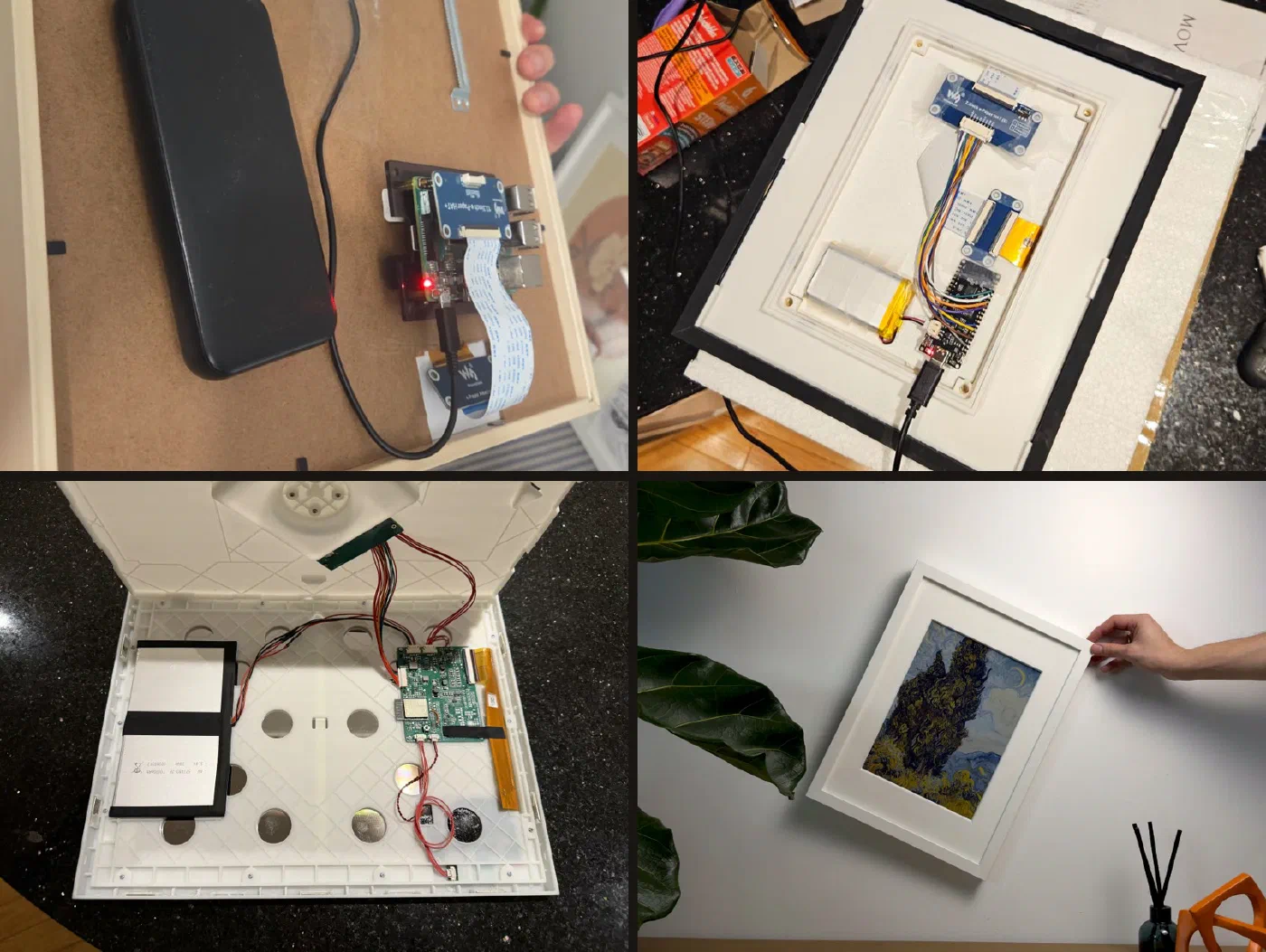
- The prototypes. A Raspberry Pi to prove an image could show up. Then an ESP32 wired by hand. Then our own board, with our manufacturer, in a case that was 3D-printed, then machined.
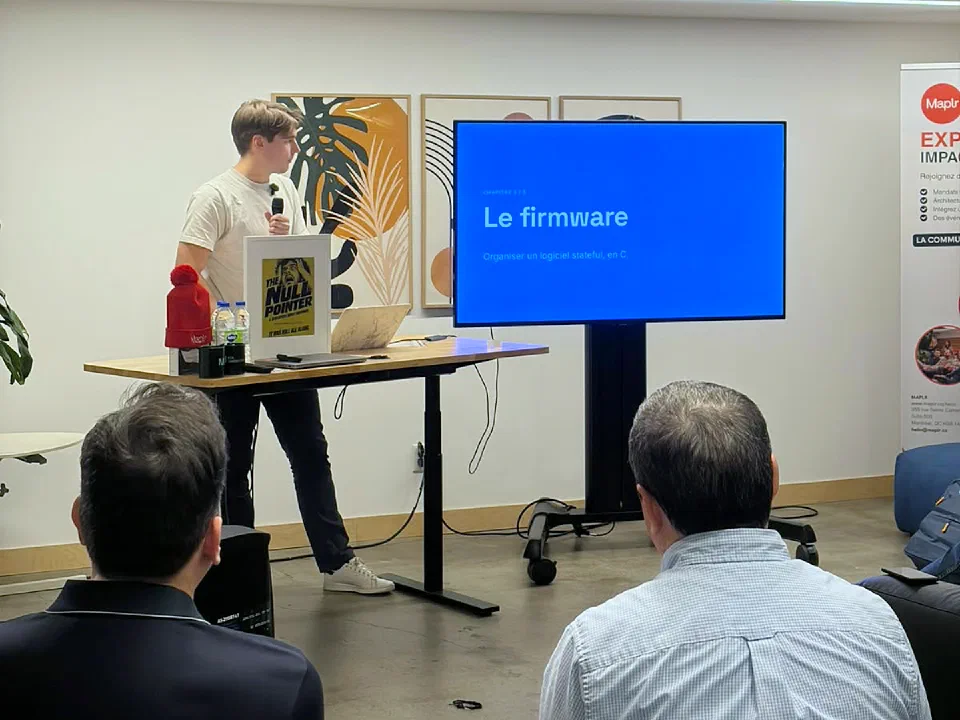
- The firmware. It’s written in C, but a Java developer would recognize the layout: controllers, services and repositories, like in Spring, plus one more layer, the drivers, that talks to the hardware.
- The energy. Our target was a year on one charge. Today, one charge is enough for over 1,500 images, so we consider it reached. Getting there meant measuring every microamp, then letting the chip sleep as much as it can.
- The updates. No software is perfect, so a frame has to be able to update itself safely, from your phone over Bluetooth or on its own over Wi-Fi. If the new version fails, the frame goes back to the old one by itself. And the frame sends us no diagnostic data unless you turn that on yourself to get help.
Here’s the talk on video, with the questions from the room. It’s in French, with English subtitles:
The slides are online, in French.
A demo from the back of the room
While I talked, Solal sat at the back of the room with his phone. Every so often, he sent a new image to the frame on the table, over Bluetooth. It’s what you’ll do at home: pick a picture on your phone, and it lands on the wall.
During the talk, Solal sent the frame a poster of the talk, then a fake movie poster, “The Null Pointer”, a nod to one of the most common bugs in Java, then a photo. Just before the questions, he sent a thank-you card to the JUG.
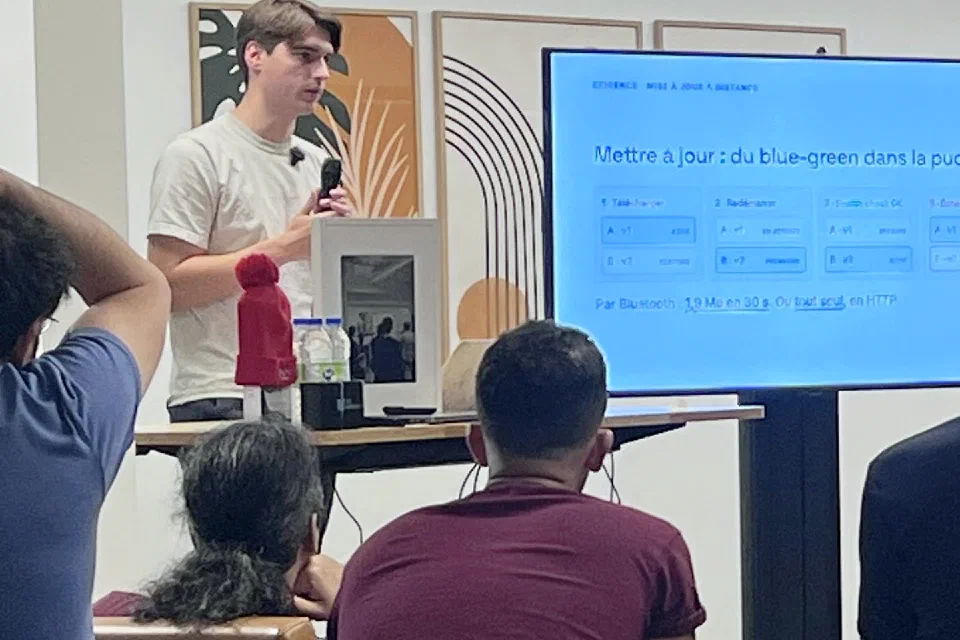
The frame went around the room
Near the end, one of the JUG’s organizers picked the frame up from the table, a prototype in a CNC-machined case, and passed it around. He’s a backer himself. That evening he got to hold the frame he backed, and see how we built it. So did everyone else in the room.
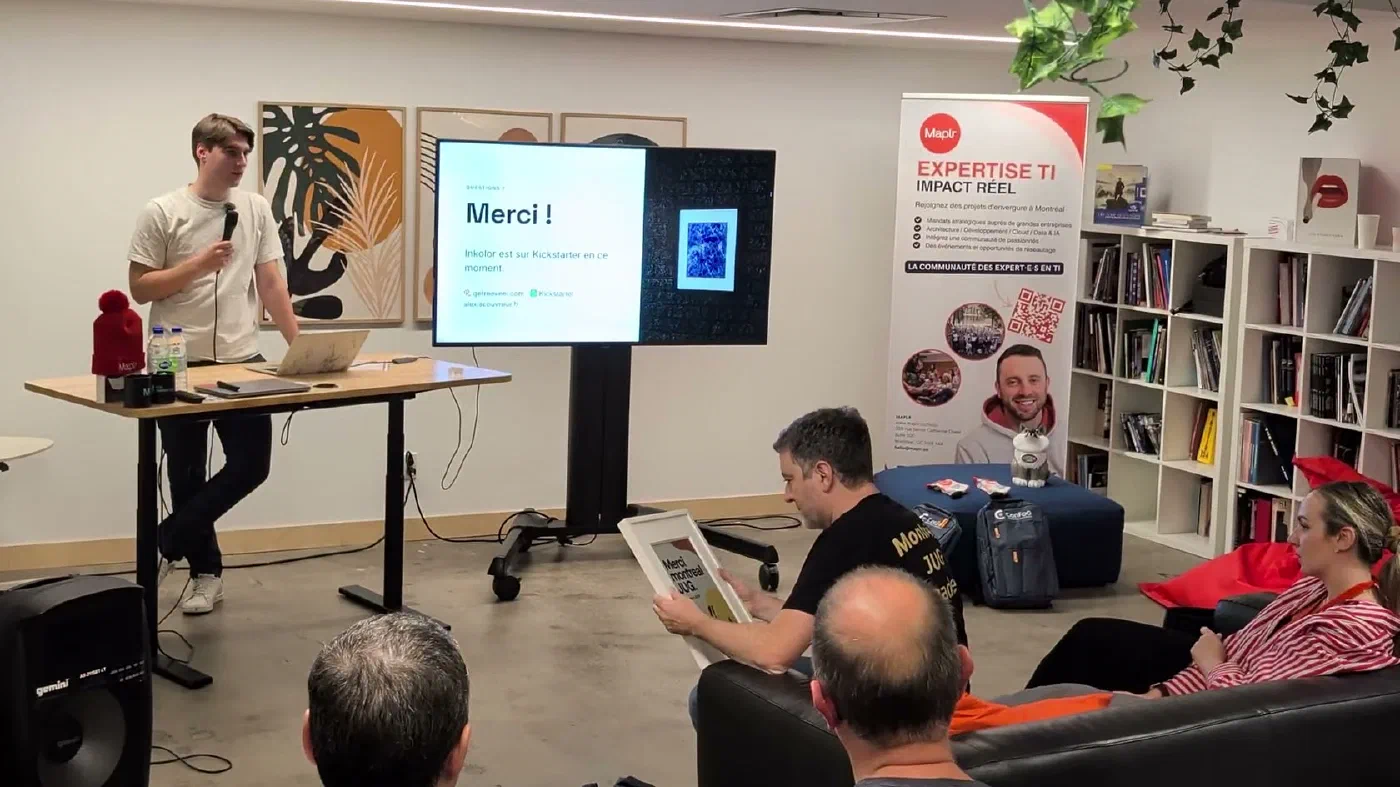
The feedback was very positive, and people had questions: our biggest development challenge, the price, who we work with, and how we make the battery last so long. In the video, the questions start at 17:52.
Where we are
Our Kickstarter runs until late November. Next come certifications and a new round of samples, then production this winter and deliveries in the spring, the same timeline as on the campaign page.
Thanks to the Montréal JUG for the evening, and to Maplr for hosting.