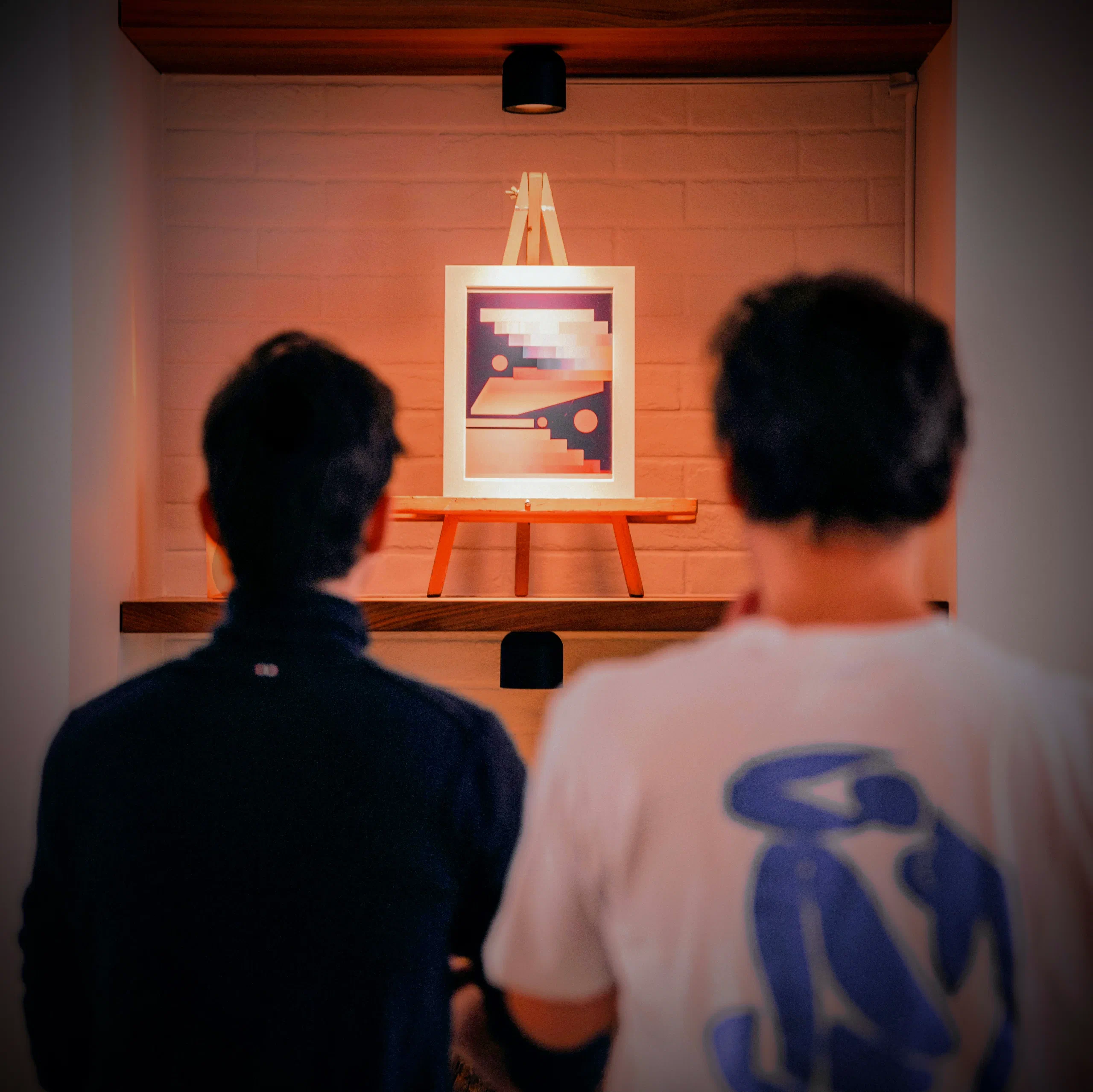
The Unexpected Beginning of Reeveel
In April 2025, a single Instagram post set everything in motion. This is the story of how Reeveel went from a taped-together prototype to a production-ready connected frame.

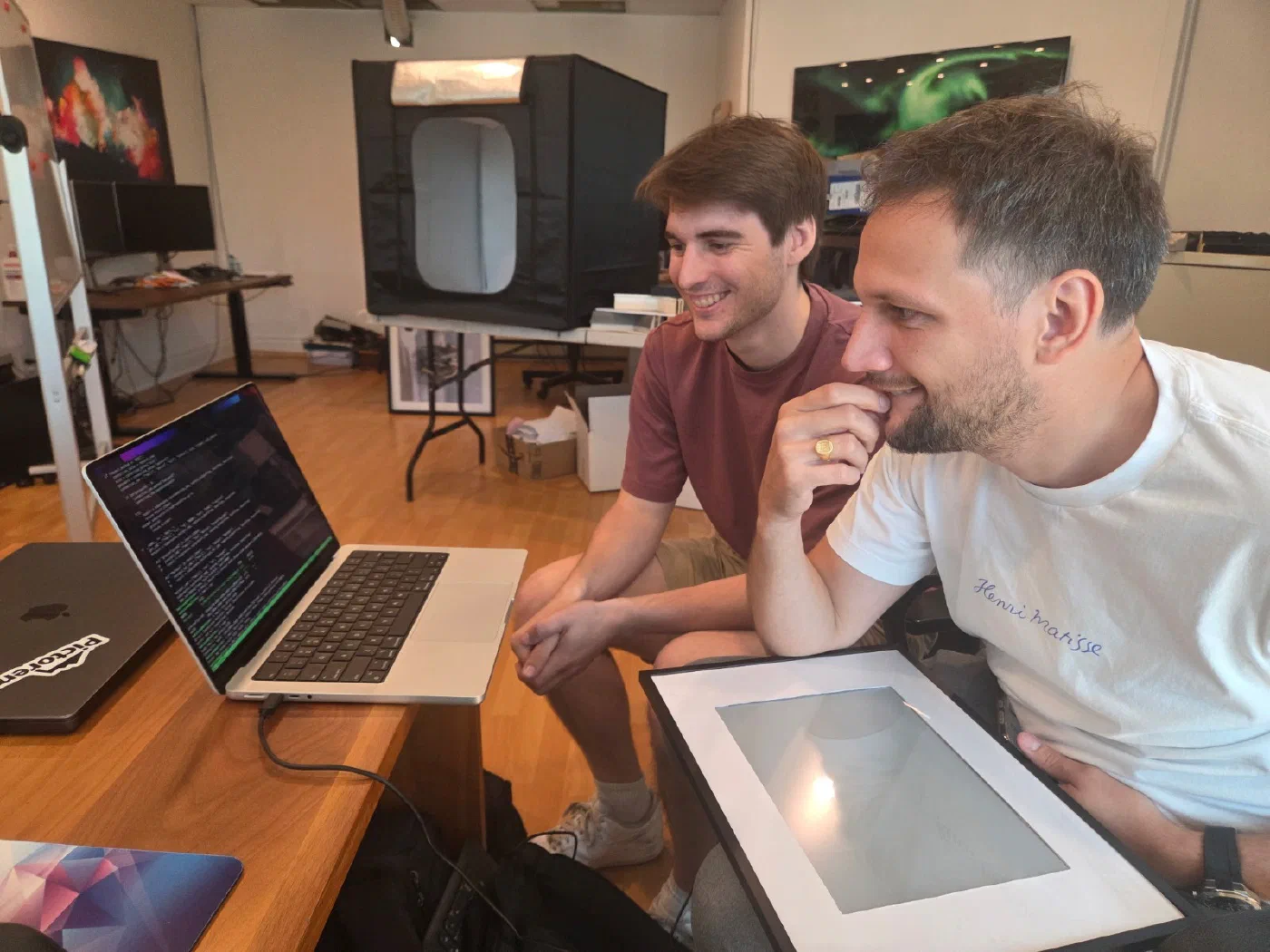
One frustration hiding two.
It all started in April 2025, almost by accident. I was doing what I probably shouldn’t have been doing: mindlessly scrolling Instagram instead of going to bed. Every now and then, though, the algorithm gets something right. That night it showed me the work of Justin Bunting (@jstnbntg), and I stopped scrolling. I bought one of his, and I would have bought five more if I could. The space, the budget, the waiting list: it’s not that physical art is complicated, it’s that the best of it is out of reach for most of us, most of the time. I wanted something that could bridge that gap. Not replace a painting on a wall, but extend how many artists I could actually live with.
At the same time, my second child had just been born. Like every parent, I suddenly found myself taking more photos in a week than I probably had in the previous year. The first laughs, the mess at dinner, the tiny hands grabbing everything. But ultimately, they ended up like the rest: buried in my phone, never framed, never really part of our lives. I wanted something smooth, something effortless, a way for those memories to leave my phone and become part of our home.
Then it clicked. What if one object could bring all of this together? Something that lives at home the way we do, that changes as our lives change.
The right screen at the right time.
In the summer of 2025, I started digging into what already existed. Classic digital frames? We all know them. Backlit, always plugged in, looking more like a mini TV than an actual frame. They all end up on the kitchen counter collecting dust.
I was convinced we could find something better. That’s when I discovered color e-ink screens, and specifically the Spectra 6 technology developed by E Ink. Unlike LCD screens, an e-ink display doesn’t generate light, it reflects ambient light, exactly like printed paper.
You might ask: how does it actually work? Think of it like tiny capsules filled with colored particles. When you send a new image, an electric charge nudges those particles into position, and then they just stay there, perfectly still, consuming zero energy until the next change. No backlight, no glare, perfect readability in any light. And because the image stays there without consuming power, you end up charging it so rarely that you almost forget it even has a battery.
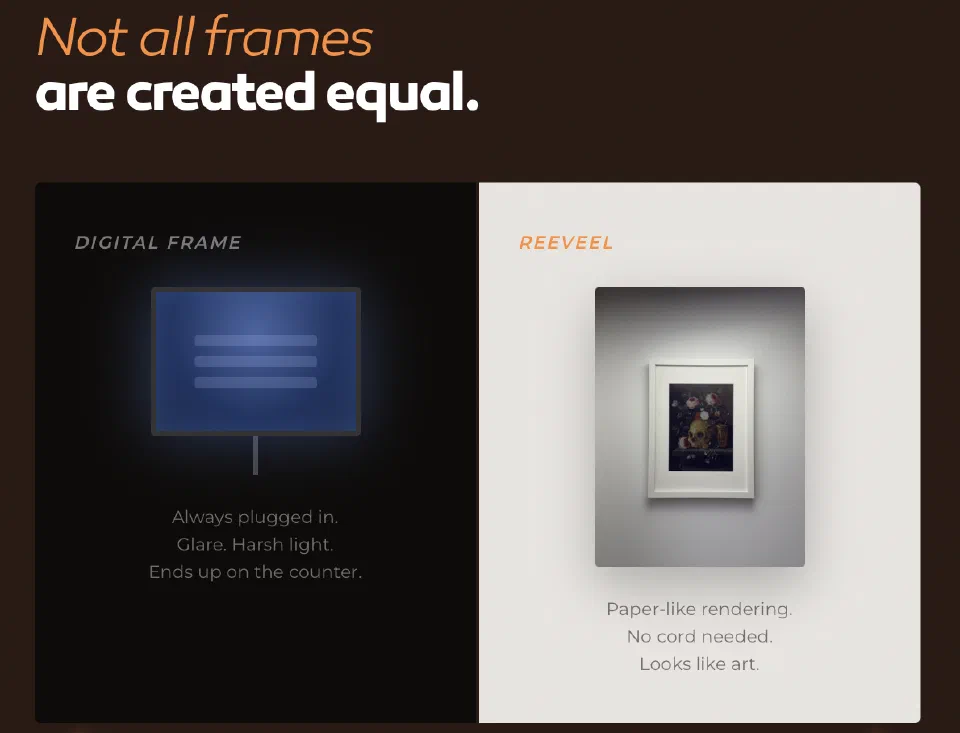
It checked every box to create a truly amazing connected object. I always like to use the example of smart light bulbs to explain why. What makes them genuinely great is that they’re still just light bulbs. You screw them in, they turn on. The technology is invisible, but open the app and you can create moods, change colors, set scenes. Reeveel is exactly that: a frame that looks like a frame, but that, if you want, can switch artwork in seconds from your phone. Technology serving the object, not the other way around.
Three co-founders, one vision.
At that point, I had a clear idea. But an idea without execution is nothing. That’s where two amazing people joined the adventure. Alexis and Adrien brought exactly what was missing, and together we cover a wide range: software and hardware development, communication, sales. What none of us had, however, was solid experience in industrial design of physical products.
No magic recipe. We learned. We asked. We iterated.
We also had the chance to work with Éric, who brings decades of experience in 3D modeling and product design. His involvement early on gave us a real foundation.
Our very first prototype wasn’t even 3D printed. I bought a basic frame, cut open the back, and taped the chip directly inside.
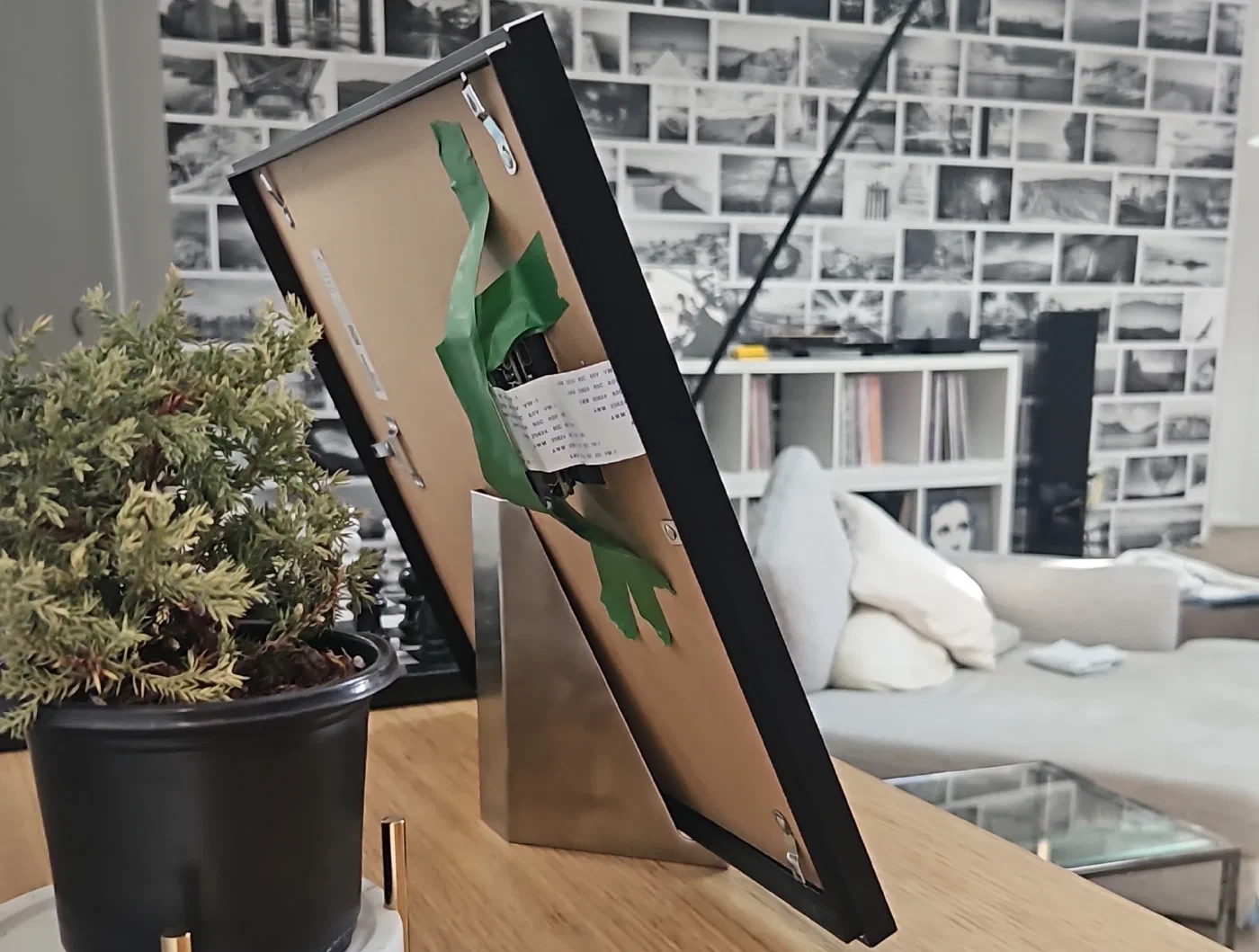
Version 0. The chip is literally taped to the back of a store-bought frame. It worked.
From there we graduated to printed versions on our Bambu Lab, though the print bed size meant some early parts had to be glued together. When we needed higher quality and larger pieces, we turned to Axis Prototype, a local Montréal shop, whose machines opened up possibilities our home printer simply couldn’t.
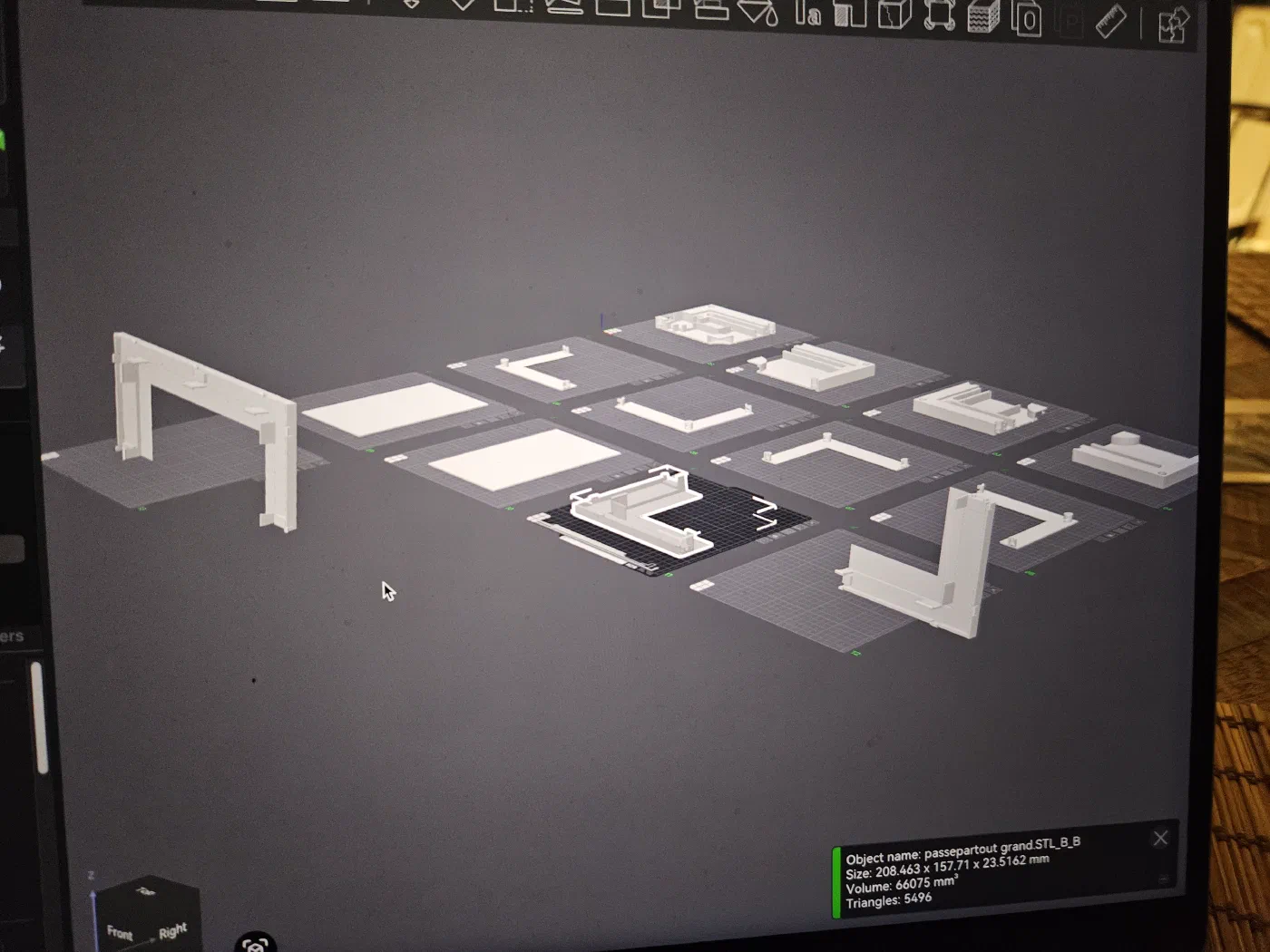
All the parts laid out in Bambu Studio before a full print run.
Eventually we moved to structured versions with different chips (for my fellow technical people: an ESP32-C6 first, then an ESP32-S3. Each swap came with its own rabbit hole).
We tried magnetic frames, built rotating mounts, experimented with finishes. Every week we thought we were getting closer. Then we’d discover a new problem we hadn’t even imagined.
One example? Our magnetic system. We wanted changing the passe-partout to feel effortless, almost satisfying. Finding the right magnets turned out to be far more complicated than we expected. Too strong, and removing it felt frustrating. Too weak, and it no longer felt secure. Even after finding the right balance, we learned that integrating magnets into an injection-molded product adds another layer of complexity to the manufacturing process.
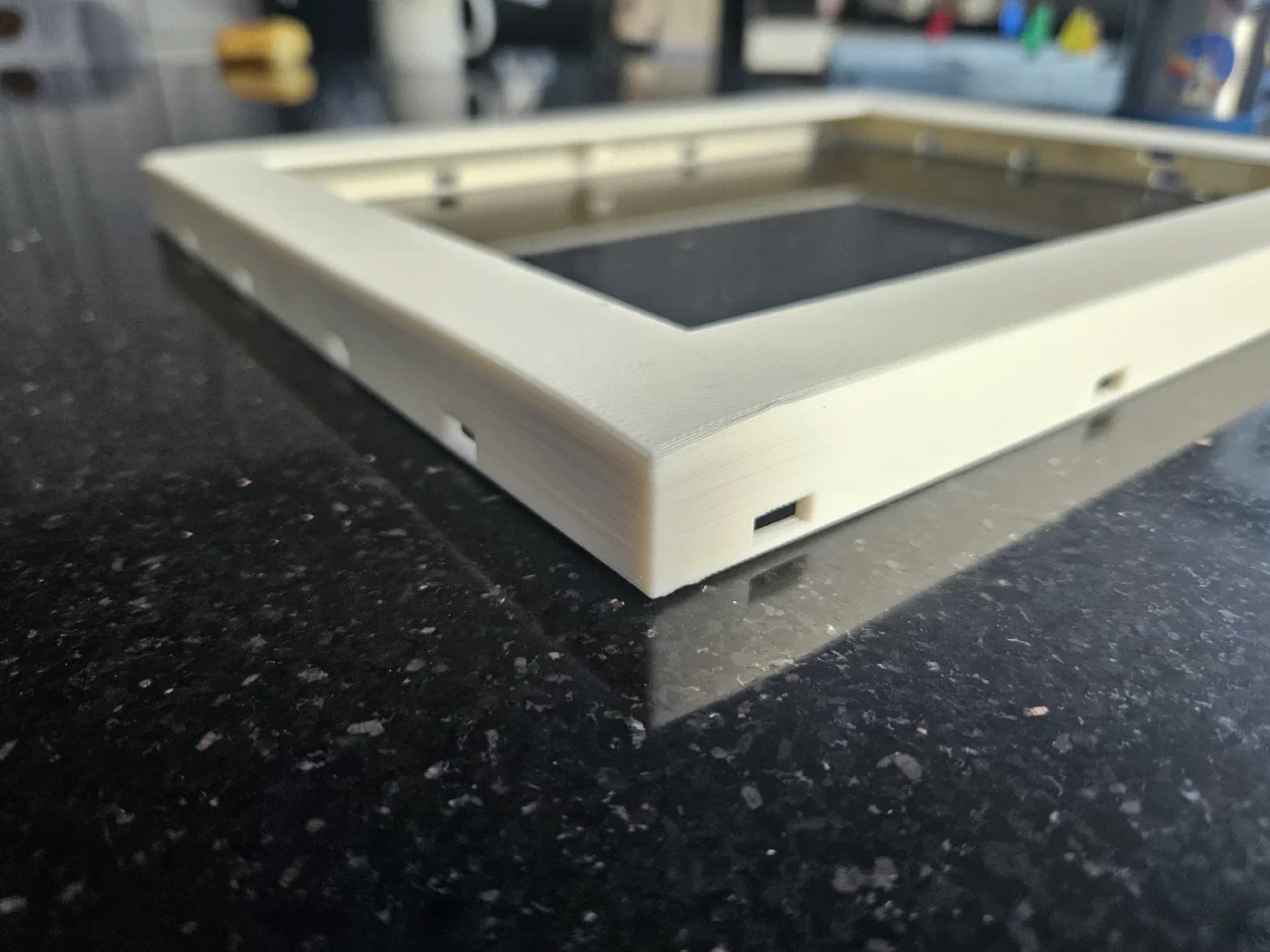
The very first magnetic test failed.. The layer between the magnets was too thin to be printed.
It’s funny because, if we do our job well, nobody will ever think about the magnets. They’ll just enjoy how natural it feels.
That’s prototyping. It’s not glamorous. But it’s indispensable.
What this phase really taught us.
More than once, the three of us looked at each other and wondered if we’d underestimated what we were getting ourselves into. Every answer seemed to create three new questions.
Looking back, I think that’s also why building Reeveel as a team mattered so much. There were plenty of moments where one of us was stuck, frustrated, or simply doubting a decision. Having people to challenge your ideas, share the excitement when something finally worked, or remind you why you started made all the difference.
Also Iterating fast means deciding fast. It forced us to make dozens of choices (materials, proportions, mechanisms..) before we even had an industrial partner. And when, in December 2025, we started working with our manufacturer, we didn’t show up empty-handed. We had precise specifications, a clear vision, and expertise we could never have gained any other way.
Were we still surprised? Of course. Some materials cost more than expected. Some parts we thought could be made in one piece actually required multiple distinct components, with assembly adjustments we hadn’t anticipated.
But today, we’ve received and validated the first versions of our production prototype. The day our production prototype was supposed to arrive, I don’t think I’d ever waited for a delivery driver like that before. It genuinely felt like Christmas morning when I was a kid. Except this time, instead of wondering what was inside the box, I already knew.
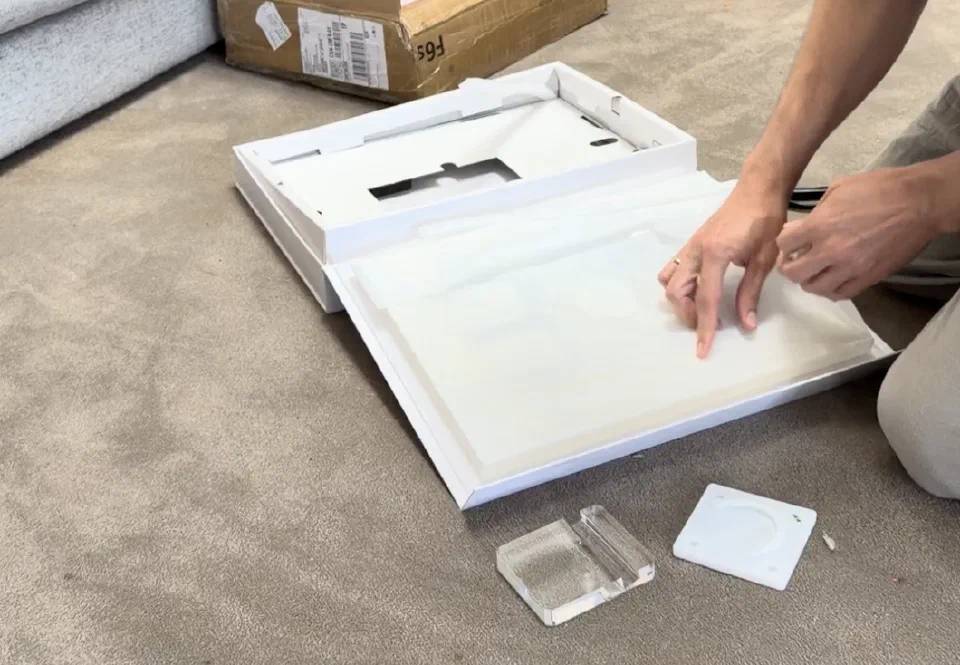
Months of hard work that we can finally unpack, this phase completely changed the way we look at everyday objects. Before starting Reeveel, I never really thought about why a product feels premium, why two pieces fit together perfectly, or how many decisions hide behind something that seems simple.
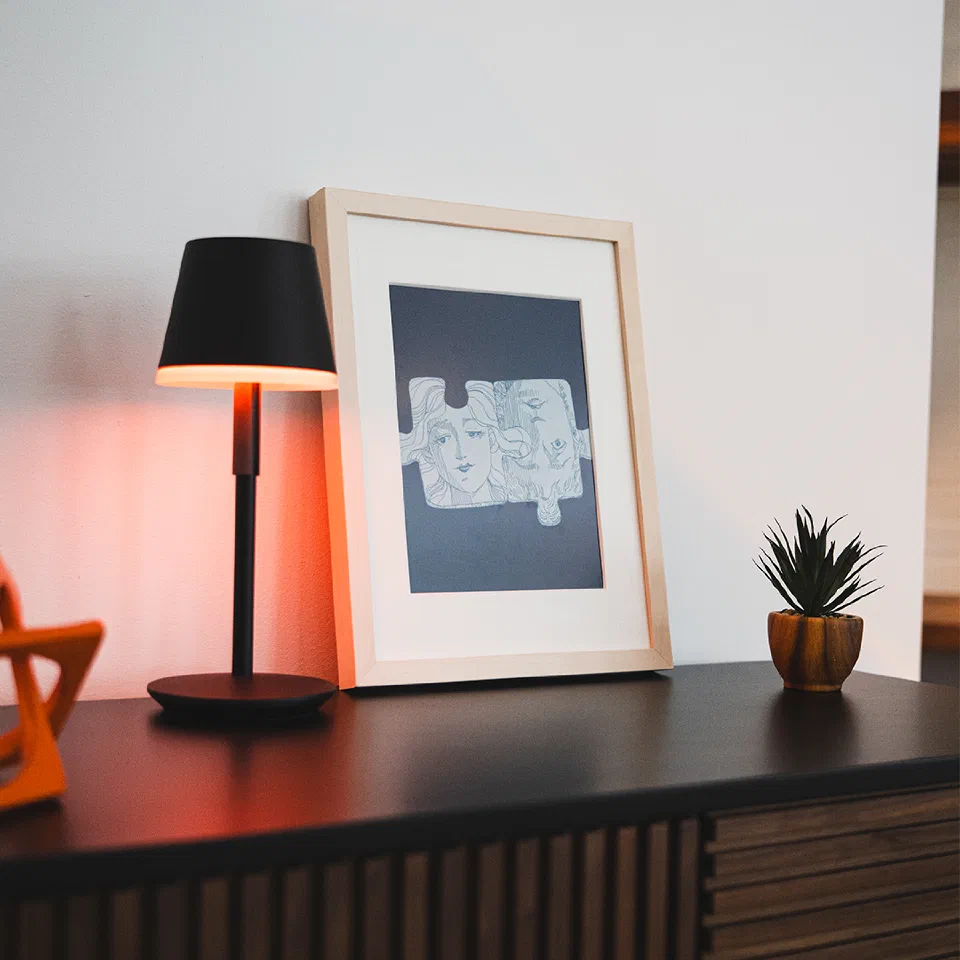
The production prototype. This is what almost a year of work looks like.
What’s next, and why we’re telling you.
By the time you’re reading this, we’re launching our Kickstarter pre-campaign. This isn’t just a “sign me up” button, it’s an invitation to join an adventure that has already come a long way, and still has plenty of road ahead.
We’re calling this series Unframed. Because that’s exactly what it is: no filter, no polish, just the real story behind the frame, nights spent modeling after the kids were finally asleep, and mornings spent questioning every decision we’d made the night before.
Looking back, it’s funny how naïve we were when we started. We thought we were building a frame. In reality, we were learning an entirely new industry.